Punch Buggy Trauma Shapes Your Car Buying Decisions
Abstract
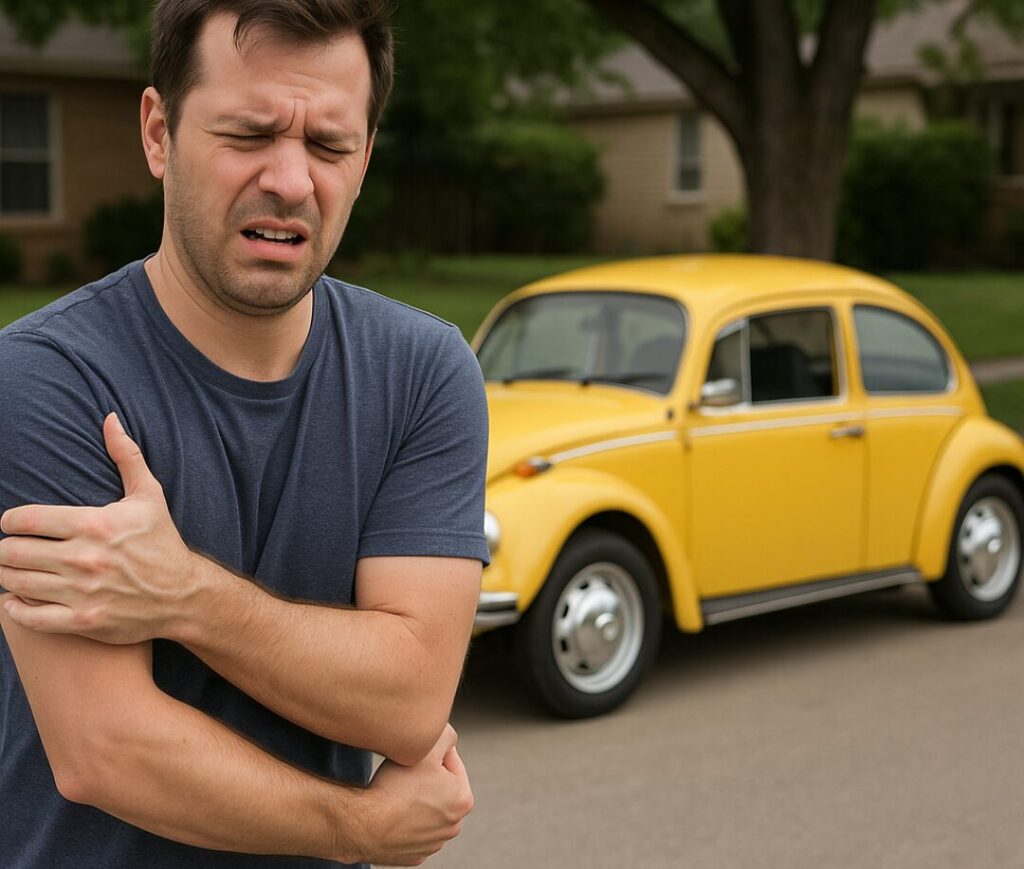
This study examines the long-term psychological effects of the childhood game “Punch Buggy,” in which individuals received surprise arm punches upon sighting a Volkswagen Beetle. Findings indicate that these experiences may have shaped adult car-buying behaviors, influencing both vehicle size preferences and emotional attachment to Beetles.
Methodology
A total of 82 participants (ages 25–45) were recruited through online forums for people who still flinch at yellow cars. Each participant completed a short survey recalling childhood Punch Buggy encounters, including punch intensity, punch frequency, and the emotional tone of the assailant’s laughter. Vehicle ownership data were self-reported and cross-referenced with visible arm-guarding reflexes observed in parking lots.
Results
Analysis revealed two clear behavioral patterns:
- Defensive Buyers (62%) — Individuals exposed to high punch frequency favored large vehicles such as SUVs, trucks, or minivans, citing “safety,” “space,” and “the inability to be punched through the window.”
- Trauma Bonders (38%) — A smaller group developed affection for Volkswagen Beetles, interpreting ownership as “taking back control” or “making peace with the bug.”
No participants reported owning motorcycles, which researchers interpret as evidence of healthy self-prese
Conclusion
The study concludes that Punch Buggy exposure may subconsciously direct adult automotive choices. For some, trauma manifests as a need for protection; for others, reconciliation through Beetle ownership. Future research is recommended on whether other playground activities—such as “Tag” or “Red Rover”—contribute to the rise in hybrid vehicle purchases.
References
Martínez, L. (2011). Punches Per Mile: Volkswagen Sightings and Bruised Biceps. Journal of Dubious Behavioral Science, 7(2), 113.
Patel, R. (2020). PTSD: Punch-Traumatic Stress Disorder in the Modern Driver. Proceedings of the Semi-Credible Institute of Road Psychology, 9(4), 301.