
Abstract
A recent review by the Institute for Political Aesthetics and Domestic Forecasting (IPADF) suggests that political ideology is widely believed to predict personal style, family structure preferences, and overall emotional stability. Researchers note that these beliefs persist despite limited evidence and overwhelming confidence from people who “can just tell.”
Methodology
Researchers analyzed 2,042 political opinions sourced from social media threads, unsolicited dinner conversations, and comment sections that began with “I’m not saying all, but…” Participants were categorized based on how quickly they mentioned bodily autonomy, family values, or “just wanting to be left alone.” Additional variables included bumper sticker density, use of the word “unhinged,” and frequency of moral exhaustion.
Results
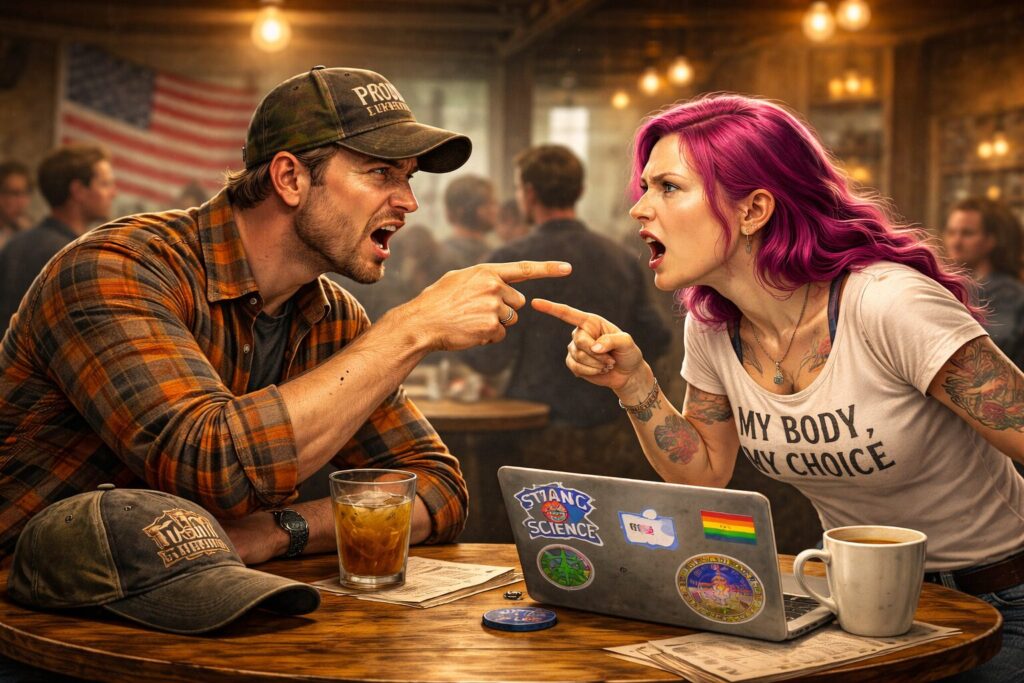
Liberals were commonly characterized as autonomy-focused, expressive, and suspicious of traditional family structures, often citing systemic failures such as foster care as evidence that family values are optional or outdated. Conservatives were largely described as uninterested in liberal behavior, provided they could maintain property rights, personal freedoms, and a household that functions on predictability and home-cooked meals. Both groups reported believing the other side is deeply obsessed with control, while simultaneously insisting they personally “don’t care.”
Conclusion
Findings indicate political ideology functions less as a governing philosophy and more as a shortcut for judging lifestyles, motives, and parenting choices. Researchers conclude that while policy positions may differ, confidence in one’s own moral clarity remains bipartisan.
References
Institute for Political Aesthetics and Domestic Forecasting (IPADF). Ideology as Interior Design. 2025.
Center for Assumptive Social Science (CASS). Vibes Over Data: A Longitudinal Study. 2024.