Dirty Soda Craze Strains Midwest Health and Sewage Systems
Abstract
A new report from the Center for Beverage Behavior Studies (CBBS) reveals that the dirty soda phenomenon—originally brewed up in Utah—has rapidly spilled into the Midwest, leaving both public health officials and wastewater engineers overwhelmed. The drink, a concoction of soda, creamer, and flavored syrup, has saturated the region with both pop-up soda stands and unexpected medical consequences.
Methodology
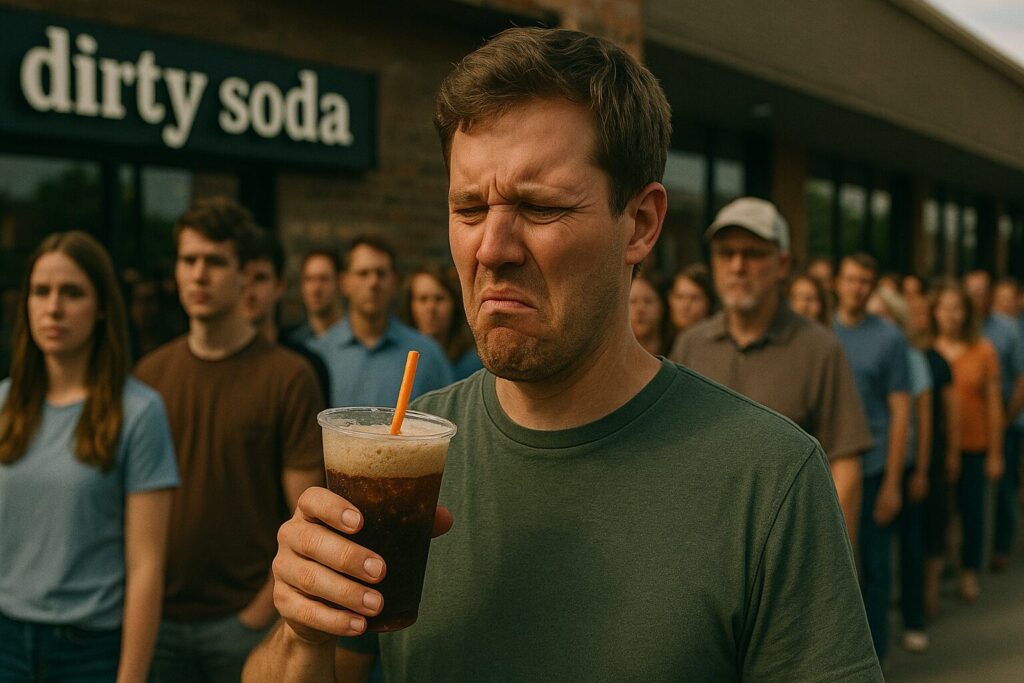
Researchers surveyed 1,250 Midwestern participants who lined up for the grand opening of local “dirty soda” franchises. Participants were monitored for sugar intake, emotional stability, and sewer contribution rates over a two-week period.
Results
Findings show that 94% of participants described their first sip as “confusingly sweet,” while 82% admitted to finishing it out of sheer peer pressure. Local wastewater treatment plants reported an unexpected spike in syrup content, clogging critical filtration systems with what officials described as “viscous caramel sludge.” Meanwhile, endocrinologists reported a temporary 37% surge in regional glucose panic, marking what experts now refer to as “The Great Midwest Sugar Surge.”
Conclusion
Though marketed as a fun regional beverage experience, the dirty soda trend appears to be contributing to both infrastructural and biological overload. Researchers recommend a nationwide detox initiative. or at the very least diluting it with water, prayer, or self-awareness.
References
Center for Beverage Behavior Studies (CBBS). Regional Beverage Trends and Infrastructure Impact Assessment. Journal of Applied Consumption Studies, 2025.
Midwest Association of Wastewater Engineers. Unexpected Syrup Load Variations in Municipal Treatment Systems. Infrastructure & Public Utilities Review, 2026.
Institute for Metabolic Readiness and Panic (IMRP). Short-Term Glucose Response to High-Syrup Beverage Consumption. American Journal of Preventive Endocrinology, 2026.