
Abstract
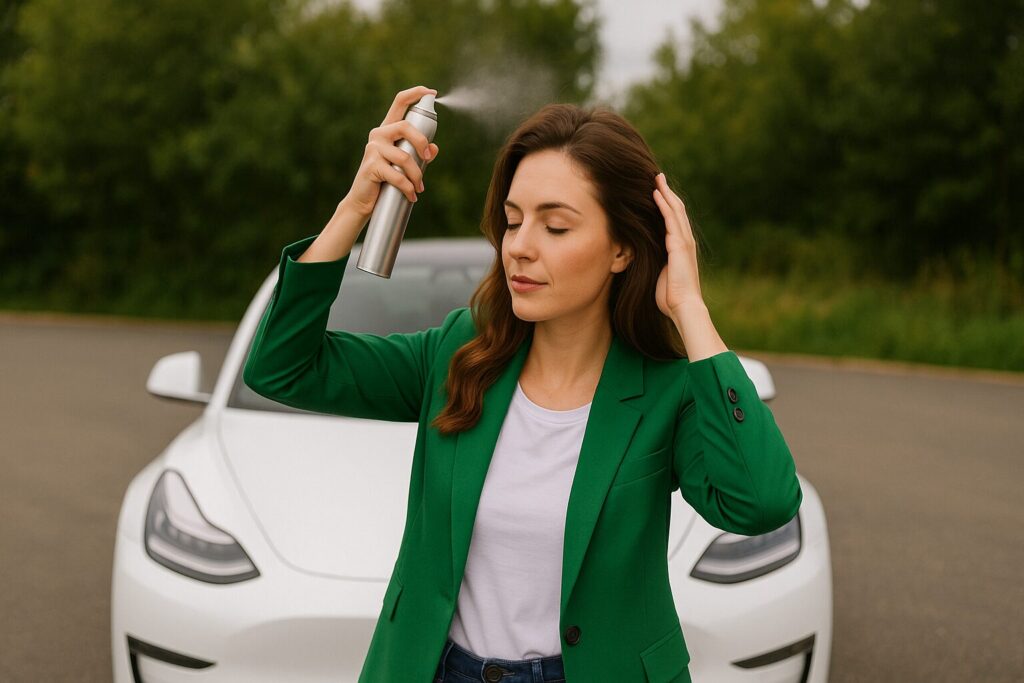
A multi-region analysis by the Institute for Sustainable Hypocrisy (ISH) reveals a striking contradiction among female owners of energy-efficient vehicles. While participants champion low-emission transportation, their cumulative use of aerosol hair products contributes an estimated 400% more propellant exposure than non-EV drivers. Researchers call the pattern “environmental offsetting by volume.”
Methodology
The ISH surveyed 312 self-identified eco-conscious drivers, who were primarily Tesla, Prius, and hybrid owners. We observed and reported on their daily routines, cosmetic product usage, and environmental guilt levels. Vehicle telemetry was cross-referenced with salon loyalty points and bathroom shelf inventories. Propellant output was modeled using the Cumulative Spray Index (CSI), factoring hold strength, frequency, and travel size redundancy.
Results
Ninety-two percent of participants reported “strong moral satisfaction”when charging their vehicles, yet 87% admitted to using multiple aerosol styling products before 8 a.m. The average Tesla owner produced the equivalent of 16 mini-fridge refills of hydrocarbon emissions per quarter. Focus-group participants described hairspray use as “a small price for planetary glamour.” One respondent stated she“drives electric so the ozone can handle a little texture.”
Conclusion
The study concludes that eco-driven image management may paradoxically intensify aerosol reliance. Researchers urge manufacturers to develop a rechargeable, zero-emission styling mist “so consumers can finally save both the planet and their bangs.”
References
Institute for Sustainable Hypocrisy. The Carbon Footprint of Fabulousness (1840).
Center for Applied Vanity Metrics. Aerosols, Ethics, and Electric Vehicles (2000).